Wildlife Photography Class

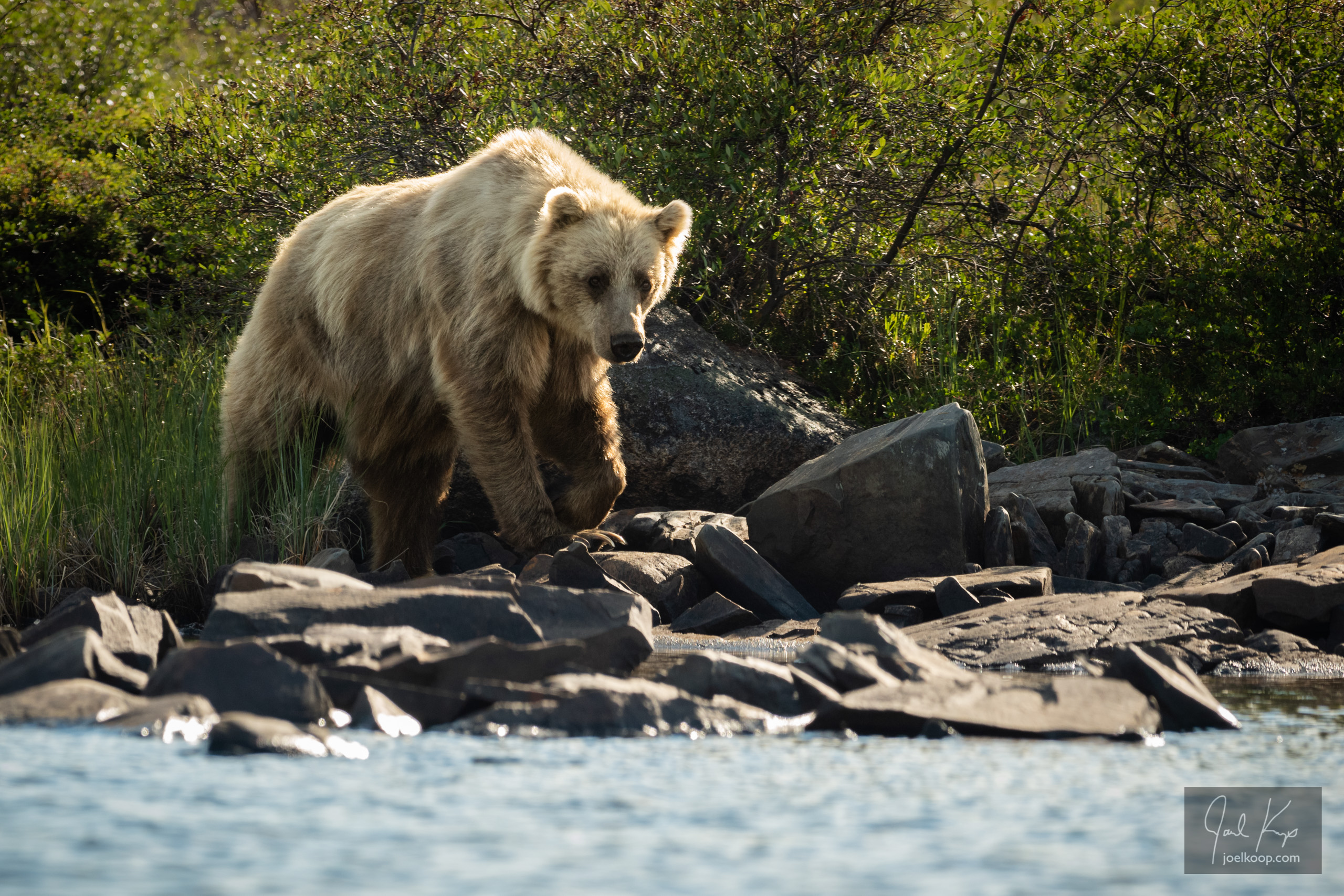
Canoeing by a grizzly bear near Jolly Lake in the Northwest Territories. Check out the claws on this guy, which let him dig up plant roots and arctic ground squirrels.

On June 29th, I’ll be teaching a wildlife photography class at the Edmonton Valley Zoo. It will be a fun day full of learning, taking photos, and enjoying the animals at the zoo. Register at the city of Edmonton’s website:
https://movelearnplay.edmonton.ca/COE/public/booking/CourseDetails/647871. Hope to see you there!

If you have any questions, you can send me an email at joel.koop@gmail.com and I’d be happy to answer them (Although I will be gone from June 23rd to 27th on the Athabasca River, and I don’t know if I’ll have much cell service).
Wildlife Photography Classes

Wild Turkeys in California

I’m excited to be teaching two new “Wildlife Photography” classes, and one more “Mastering Your SLR”. Hope some of you can make it out!

The Wildlife Photography classes are at the Edmonton Valley Zoo and are on January 7th and April 1st. You can register for them by going to the City of Edmonton’s site at ereg.edmonton.ca (course codes 571161 and 588946) or by calling 311 in Edmonton.

Mastering Your SLR is in St. Albert on January 8th. You can register at stalbertphotoclasses.com/wp/mastering-your-slr/.

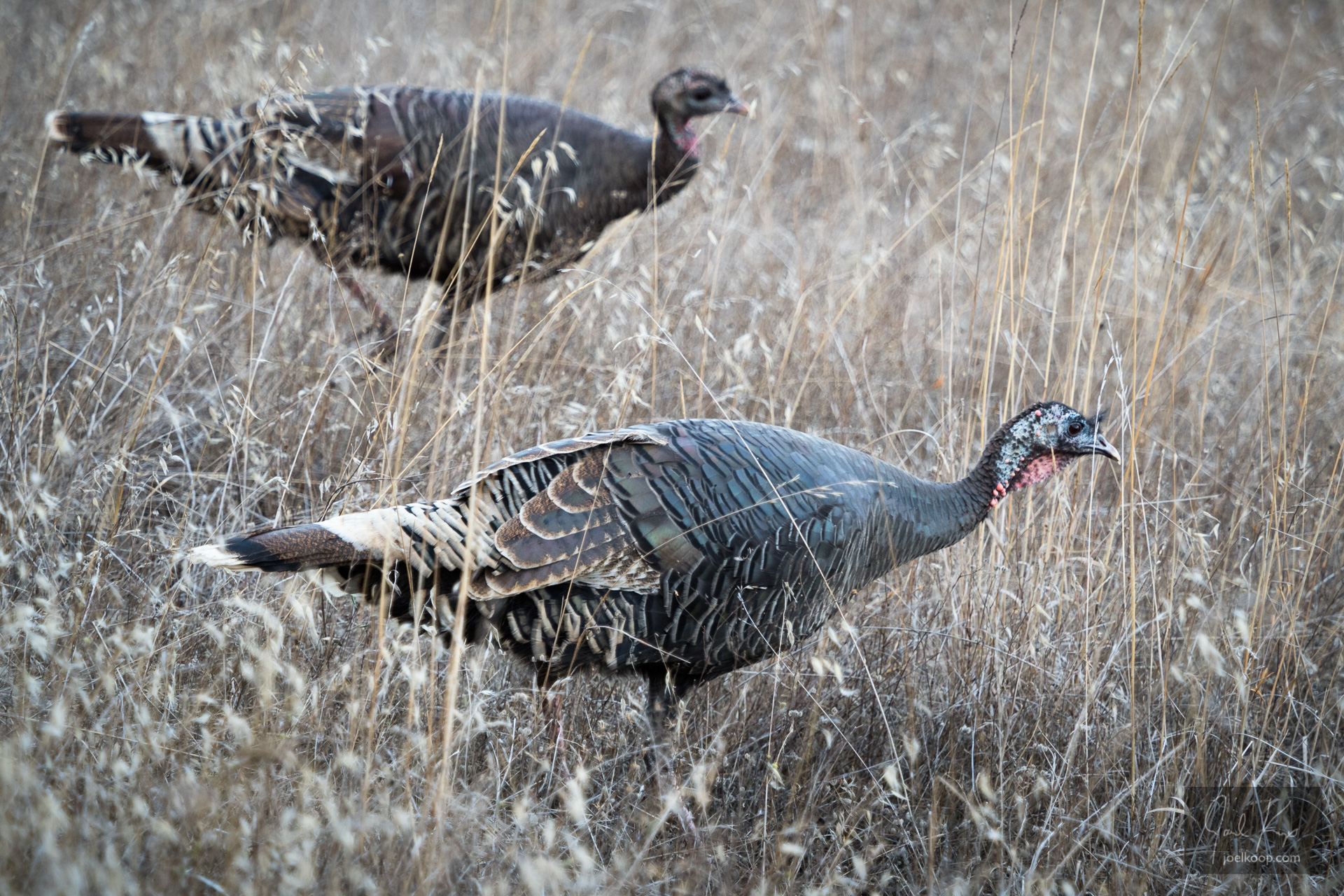
Happy Thanksgiving! I thought I’d celebrate with some live wild turkeys. The photo is taken in Edgewood County Park and Natural Preserve near Palo Alto, California.
150mm, f4, 1/640 of a second

Subjects and Interest in Wildlife Photography

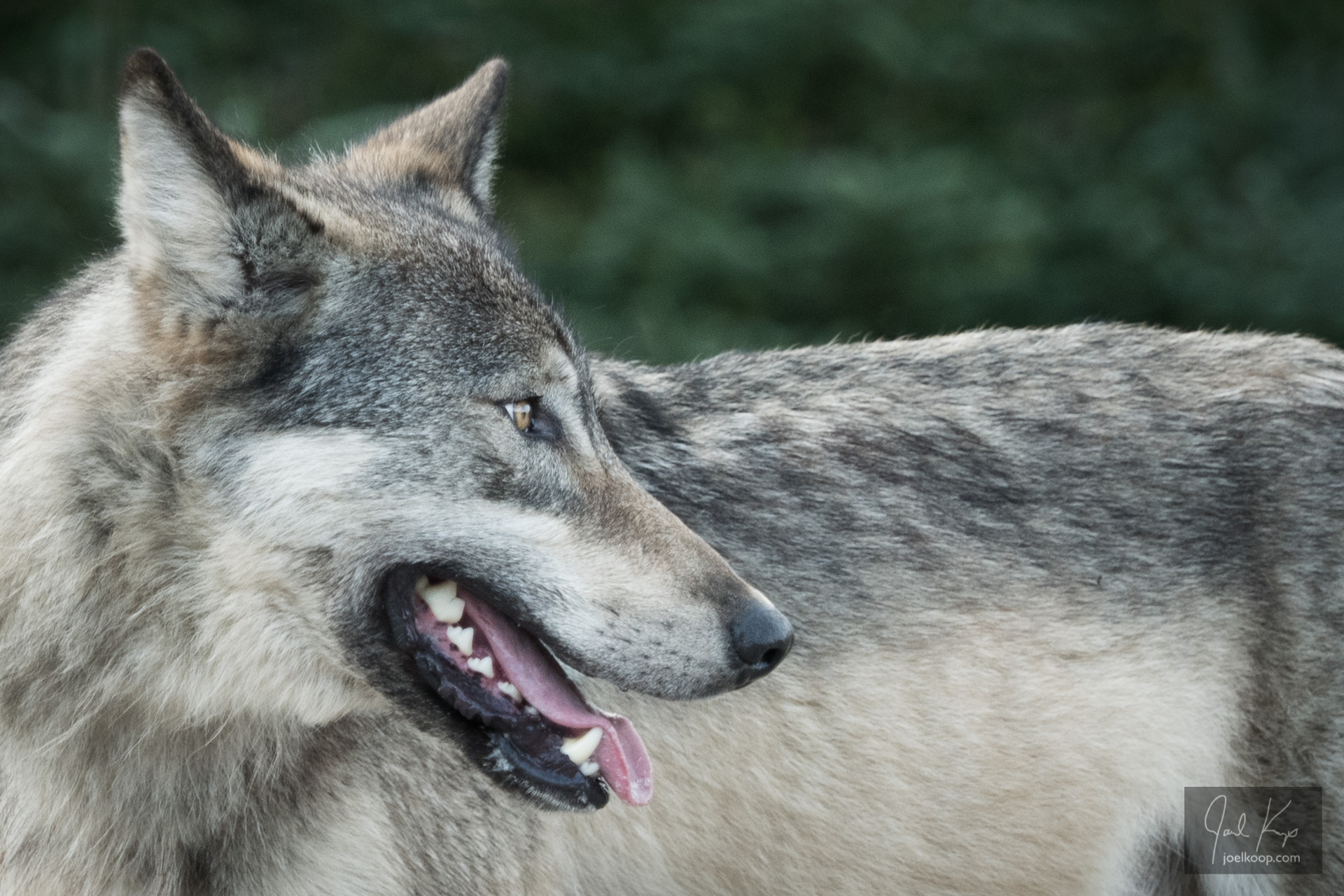
Gray Wolf Jasper National Park

A wolf is one of those reclusive and rare animals that is not often seen around here. So when I got a chance to spend a few minutes with this wolf in Jasper, I was very excited. It was watchful and curious, but most of all it was very purposeful – it had somewhere to be.

I’ve debated posting this picture for a while. I think I’m a fairly tough critic of my own photos, and I don’t think this is an amazing photo. I think it’s okay. And I don’t like posting okay photos. I’d like to be known as a really good photographer, not an okay photographer. But the kid in me says “IT’S A WOLF!!! I SAW A WOLF!!!!” And that’s hard to discount.

While an interesting subject helps a photo, I don’t think it can make a photo on its own. I still think it has to have some appealing aesthetic value beyond an interesting subject to be a good photo. This creates a bit of a conundrum for the wildlife photographer in me. While I have taken thousands of wildlife photos, I generally have very little control over the backgrounds, the lighting, and the locations of the animals. And I don’t want that control. I want the animals to go about their lives undisturbed by me. I don’t want to force them into new places and to do things that are uncomfortable for them. That kind of behaviour can threaten their lives and make them less likely to reproduce.

Every once in a while, circumstances will align just right (and knowledge of animal behaviour can make this more likely), and I’ll be able to get a good wildlife photo. The more I’m out in the woods, the more this will happen. But for me there is beauty all around – both flora and fauna, and I’m content being a photographer of opportunity. I get to share incredible landscapes with these amazing animals, and I’m thankful for the odd encounter, whether or not I get an good photo.

Wildlife Photography Class

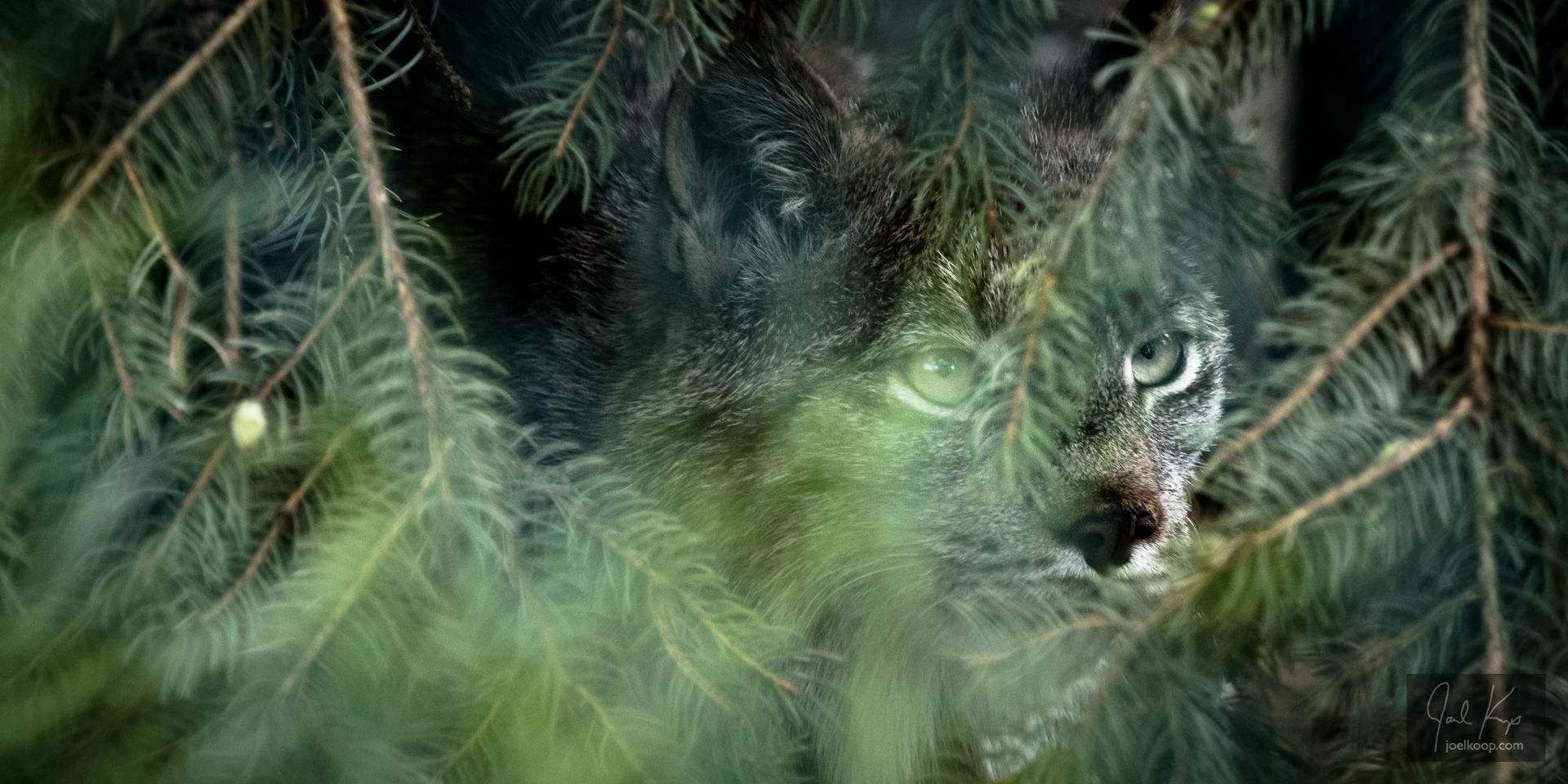
Lynx Edmonton Valley Zoo

On March 12th I’ll be teaching a Wildlife Photography workshop at the Edmonton Valley Zoo. This will be the first winter course at the zoo, and should give us some simple snowy backgrounds which should let the animals really stand out – a great opportunity for photographs. If you’re interested in registering you can go to ereg.edmonton.ca website (the course code is 554483) or call 311 in Edmonton.

I’m living in Camrose now, so I’m starting to think about teaching some classes down here if there’s interest. I haven’t had a lot of time to look into it yet, but if you’re interested, please either send me an email at joel.koop@gmail.com or in the comments below.

Lynx at the Edmonton Valley Zoo
210mm, f4, 1/250 of a second

Wildlife Photography

I don’t often call myself a wildlife photographer. Of course there’s wildlife all around when I’m outdoors. I love identifying the birds I see and trying to learn the birdcalls. I enjoy the few times I notice the white-tail deer before they notice me and start bounding away. I’ve appreciated the blasé indifference of all the bears I’ve run into while hiking. And I get really excited when I see a pine marten, otter, or mink—which is infrequent enough!

I think the main reason I’ve never considered myself a wildlife photographer is the gear. It sounds ridiculous now that I say it, but it feels like it’s hard to compete with photographers who have the multi-thousand dollar lenses and who take regular month-long trips to famous wildlife destinations. It can seem like wildlife photography is a hobby for the wealthy (although I don’t mean to dismiss the extremely hard working and definitely not-rich wildlife photographers out there—I know you exist too).

Yet somehow over the years I’ve managed to take quite a few pictures of animals. Some of them I even like quite a lot. It’s rewarding to think that I can rely on thoughtful composition and patience to get beautiful photos instead of relying on expensive gear. If I was outdoors purely for the wildlife photos I’m sure I’d be disappointed, but because I thoroughly enjoy the whole experience, I find that the wildlife experiences I do have are that much more special.

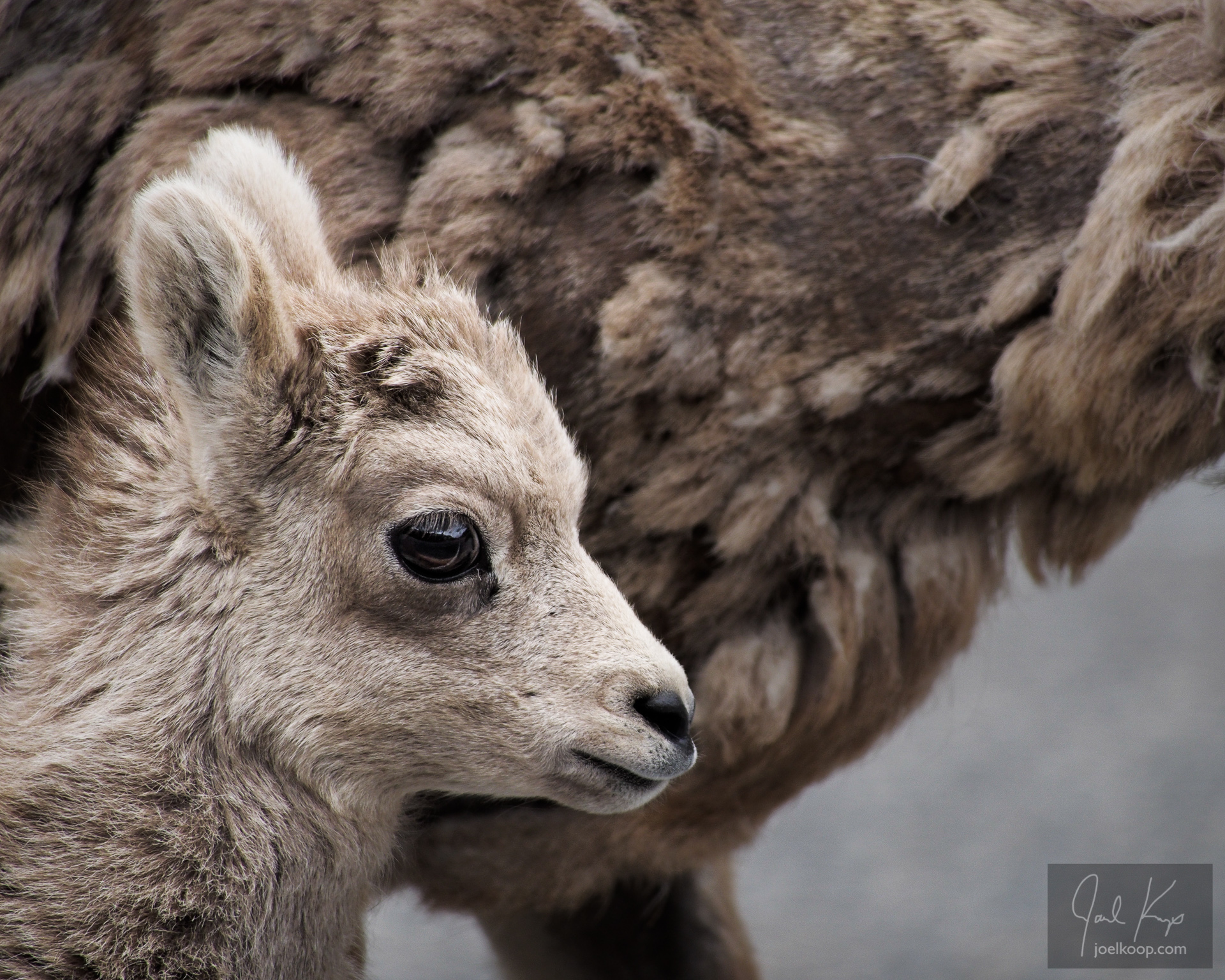
The photo above is a baby bighorn sheep in Kananaskis.
270mm, f5.6, 1/800 of a second

Wildlife and Wedding Photography

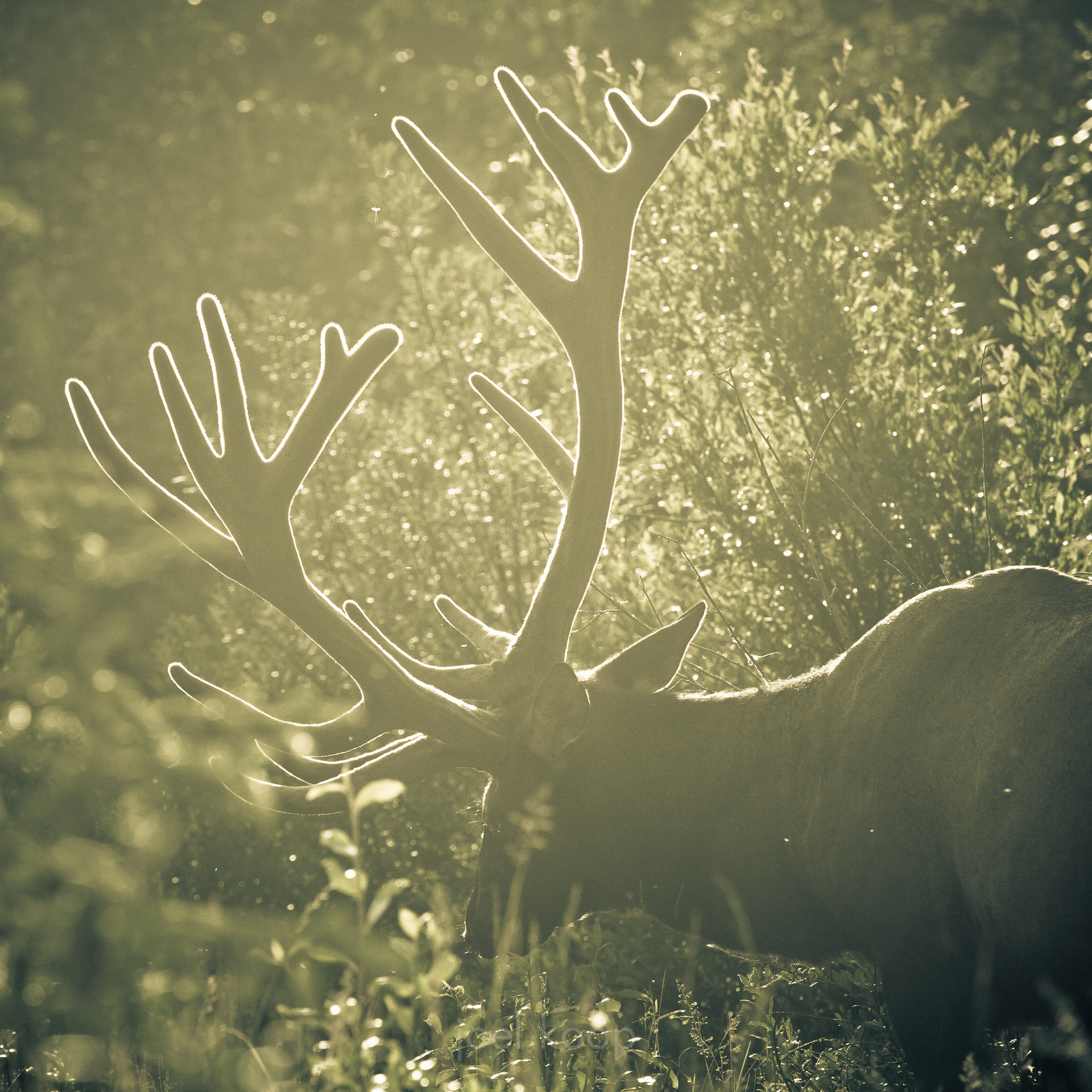
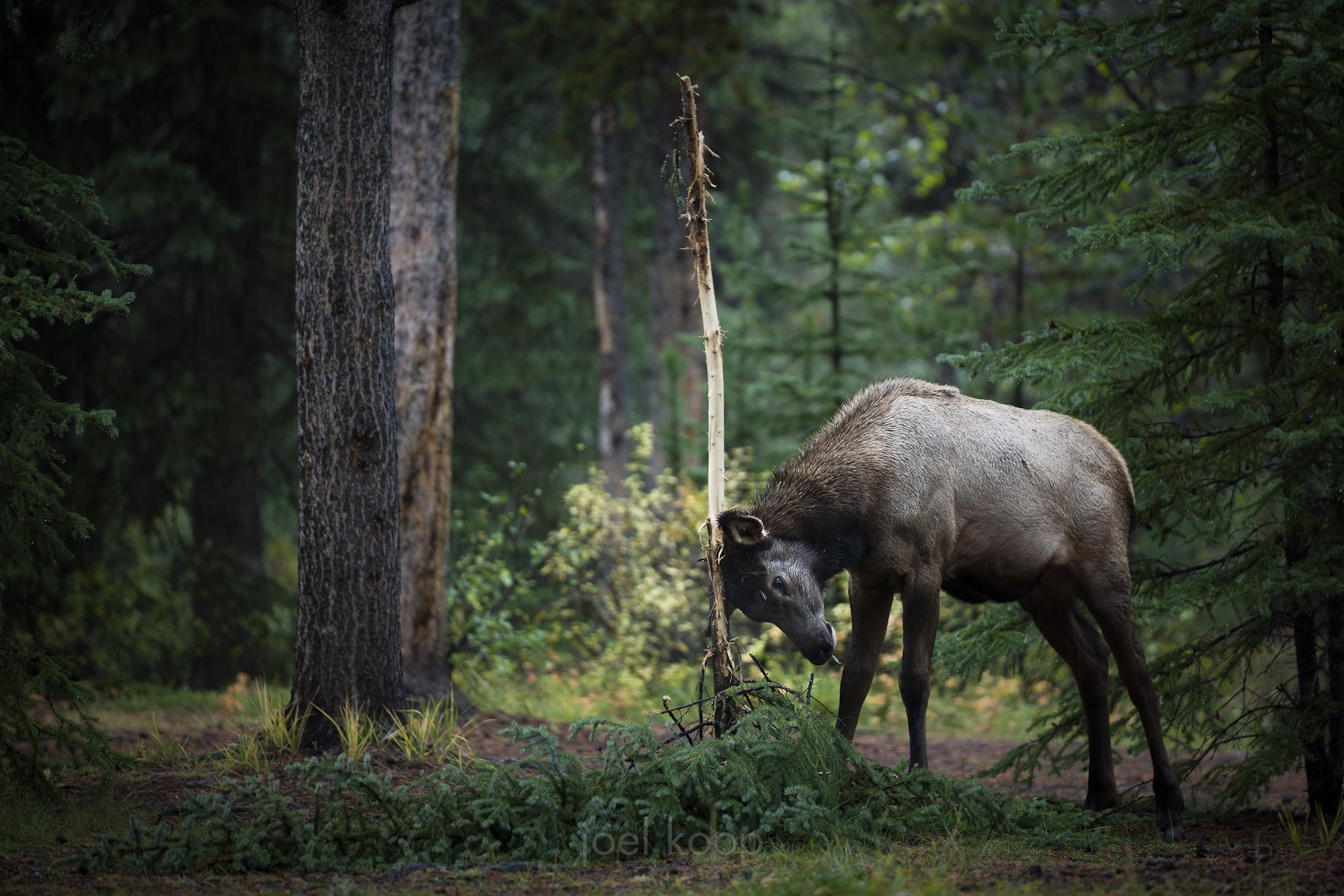
When you see an elk, what do you do? You stop and take a photo of course. And if the elk stays there, you get closer. After all, wasn’t it Robert Capa who said, “If your pictures aren’t good enough, you aren’t close enough.”?

But for some reason your brain starts to throw up little red flags. Wait a minute, you also want context — the animal acting in its habitat. And maybe you don’t want a photo of an elk eyeball, maybe you want the whole elk. And anyway, isn’t it bad for animals to get accustomed to people? And dangerous for the people?

And then, for some strange reason, you start to think of photographing weddings, of posing and of lighting. Direct evening light is pretty good — it’s warm and lends definition to shapes, but what if you backlight this? That would wash it out and give it a dream-like quality. But animals are not as cooperative as people who hire you to take their photos. You have to do the moving, and there’s no adding light. You know that flash would bother this elk and disrupt his feeding, possibly making him aggressive.

So you do the moving, far enough away that the animal is not disturbed. You wait for the animal to move into a position that works, you get the sun at just the right angle, and you get a photo. You don’t know if it’s a good photo or a great photo, but you’re pretty sure it’s not a bad photo. And that is satisfying.

Beaver Pond

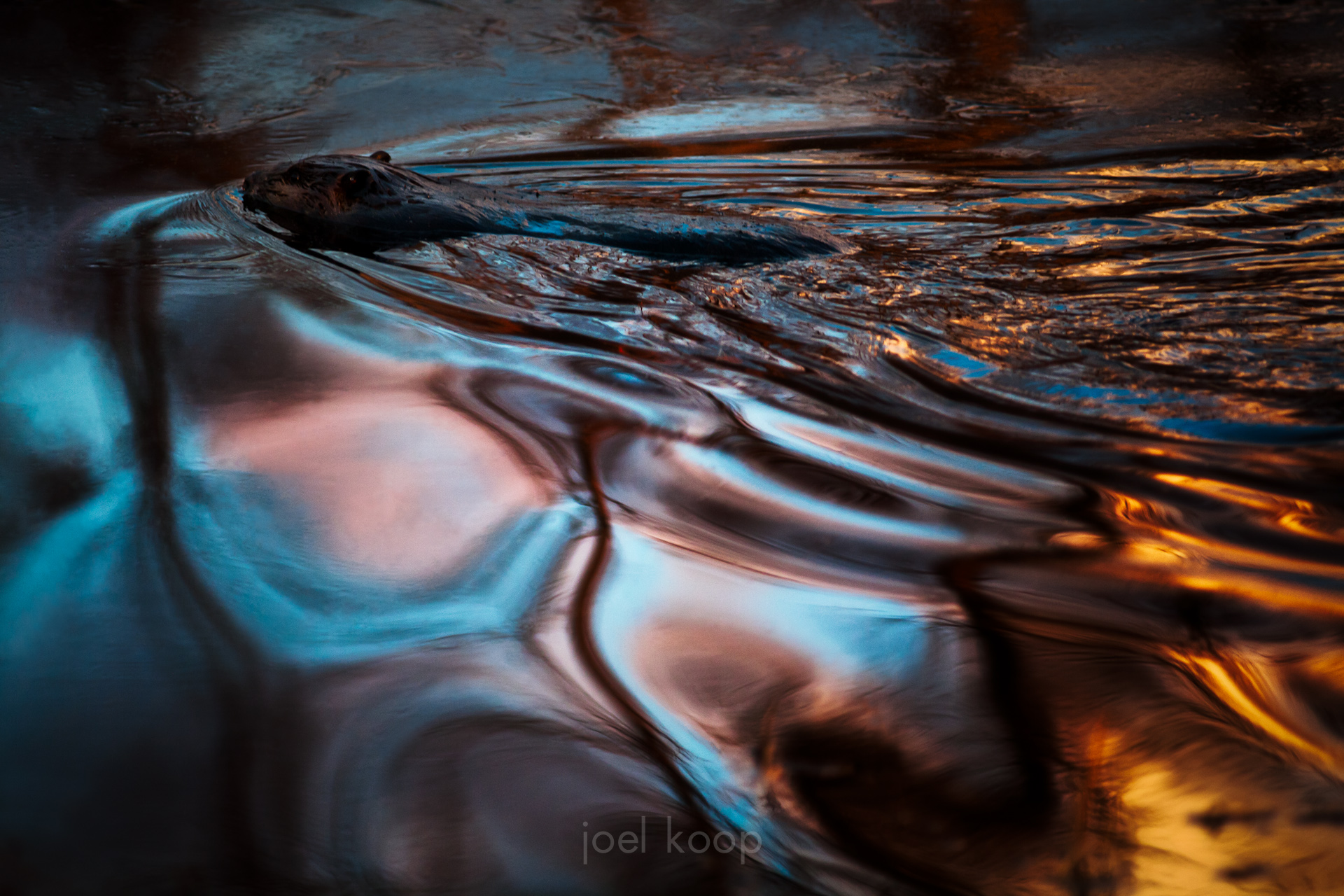
I find wildlife photography difficult — not necessarily the photographing of an animal, but the photographing of an animal artistically. I’ve been watching these beavers (Castor canadensis) doing all sorts of interesting things over the last couple of weeks. I’ve watched them chew through trees, drag them down to the water, talk to each other, slap their tails on the water, and all sorts of beaver behaviour. But photos of these fascinating activities often end up as a standard photo of a beaver. Even in beautiful evening light, a lot of shots seem to be average or only mildly interesting shots.

I’ve been trying to challenge myself to take an artistic wildlife photo. To mix my landscape aesthetic with animal subjects. This is what I’ve come up with so far. This beaver created some beautiful sunset reflections in his pond for me.

Moose Encounters

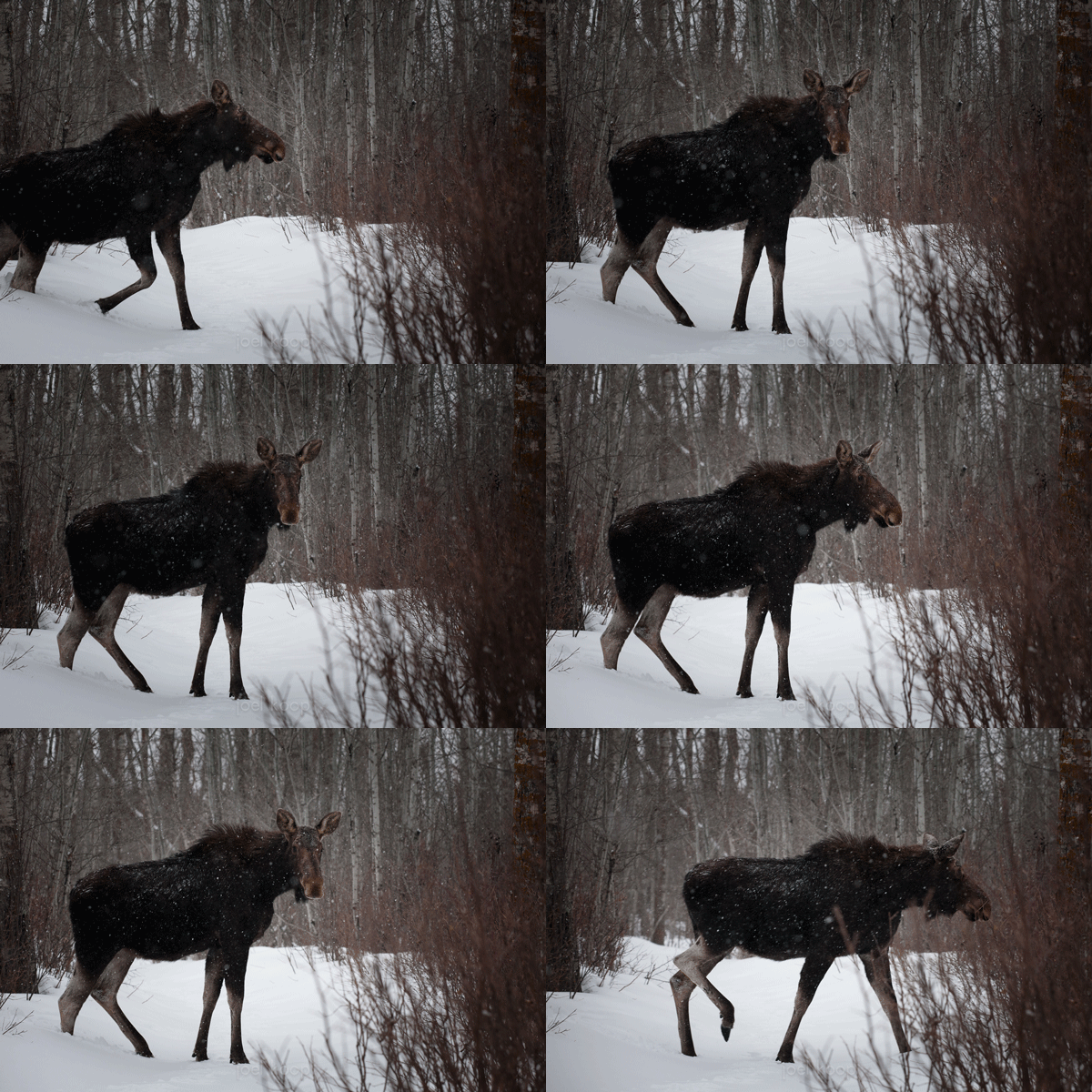
While hiking in Elk Island this week, I happened across this suspicious fellow. There were actually a pair of them, and of course the trail went right in between them. Between two moose didn’t seem like the safest place to be, so I stopped before I got too close. The one on the right ran off out of view, but I could still see the one on the left. It stopped, sniffed, eyed me, and the stalemate began. I stayed completely still, waiting for the moose to make its move. On the right, I saw some ears appear over the alders, and then disappear just as silently. I had no idea moose could be so sneaky in thick brush.

After about five minutes, the moose on the left started to move—tentatively at first, and then more confidently, chewing on a few available twigs. As it stepped out on the trail it looked me over and then moved off to do moose-type things. I was very happy with this development. Although moose are not generally agressive, the moose was very close, and I was very alone. And though I like to think that if I don’t bother animals, they won’t bother me, this only holds true until the first time it doesn’t. And that’s a little scary.